België / Belgique
 Français
 English
 The
Netherlands
The
Netherlands Deutschland
 International
What makes corporate clothing truly fit for purpose?
Corporate clothing is a recurring purchase that directly affects how employees present themselves and how long garments remain serviceable. For procurement managers, the decision goes beyond appearance or colour — it comes down to predictable performance: comfort during long working days, a fit that doesn’t restrict movement, fabric quality that retains its properties after repeated washing, and a collection that aligns with the organisation’s identity.
When these criteria are clearly defined from the outset, purchasing decisions become more consistent — and corporate clothing stays representatively wearable for longer.

Before discussing criteria such as fabric or style, it pays to map out the context of the wearer. Corporate clothing is used across a wide variety of environments, each with its own demands:
- Office and desk-based roles, where sitting comfort and a polished appearance take priority.
- Front office, reception and hospitality, where a professional image and freedom of movement must go hand in hand.
- Commercial and sales roles, where clothing must withstand travel, client meetings and changing conditions.
- Mixed-function roles, where the same garments must bridge multiple contexts.
A blazer that sits comfortably during a day at the office may feel restrictive during long car journeys or extended periods of standing. It is therefore worth mapping out the typical movements and working conditions of wearers before making a selection.
What role does appearance play in corporate clothing?
Appearance is not a secondary concern in corporate clothing — but it is not an end in itself either. Work clothes contribute to brand perception when they are consistent: the same colours, the same silhouette, the same quality impression across departments and functions.
In practice, procurement managers find that a professional look deteriorates quickly when garments distort, shrink or fade. A well-fitted blazer that looks unkempt after twenty washes undermines brand image just as much as a poor initial choice.
The deciding criteria: colour fastness after industrial laundering, retention of silhouette and cut, and the degree to which pieces can be combined within a coherent collection.
Why is fabric quality so important in corporate clothing?
The choice of fabric largely determines how long corporate clothing retains its properties. Not every fabric that looks good at the point of purchase performs equally well over time.
The following properties are relevant when assessing fabrics for professional clothing:
- Elasticity and shape recovery: a fabric with three-dimensional stretch moves with the wearer and returns to its original shape. This prevents bagged-out knees — one of the most common complaints about office clothing.
- Pilling resistance: fabrics that pill quickly lose their professional appearance, even if the fit is still correct.
- Breathability: when worn for extended periods in heated office environments or during travel, breathability has a significant impact on wearing comfort.
- Wash durability: clothing that retains its colour, fit and finish after fifty wash cycles is considerably more cost-effective on an annual basis than garments that need replacing sooner.
- Crease and iron resistance: for employees who travel frequently or work irregular hours, this is a functional requirement — not a luxury.
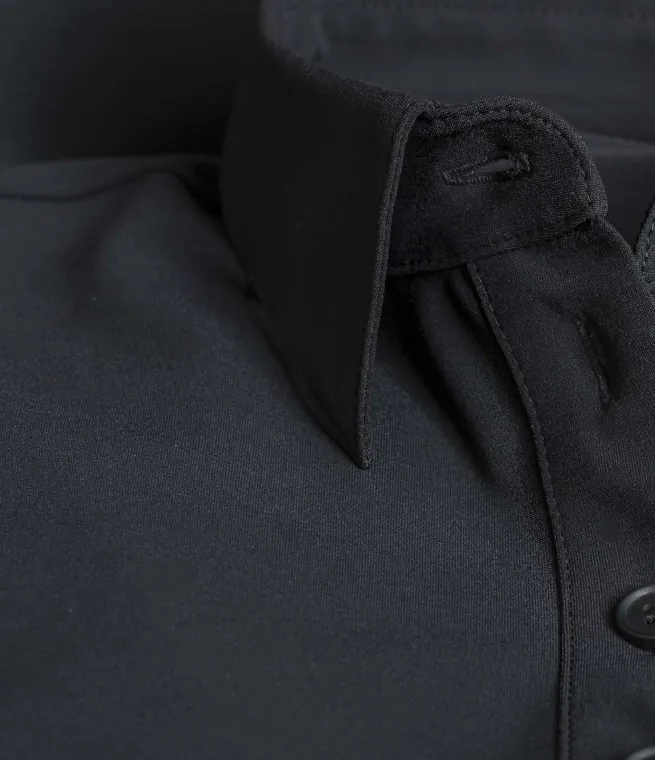
At Van Moer, we have chosen Sensitive Fabrics by Eurojersey — an Italian-patented combination of polyamide microfibres and LYCRA® elastomer — developed specifically with these requirements in mind. The open, honeycomb structure of this fabric promotes air circulation and rapid drying, while the high elastane content ensures the garment retains its shape. These technical fabrics also carry the Oeko-Tex Standard 100 certification, confirming that the materials are free from harmful substances.
How does fit affect the serviceability of corporate clothing?
Fit is a functional criterion in corporate clothing. A poorly fitting garment leads more quickly to complaints, reluctance to wear it and premature wear-out — resulting in additional orders, greater logistical pressure and higher costs per employee.
For corporate clothing serving mixed audiences — men and women across a range of body shapes — it is advisable to trial garments with representative wearers before a final decision is made. A blazer that fits ten wearers perfectly but is uncomfortable for twenty others will simply not be worn in practice.
The key zones when assessing fit: shoulder and arm reach when stretching, seated comfort at the waistband and leg, and freedom of movement in the shoulder area for roles that involve frequent hand gestures.
What are the maintenance requirements for corporate clothing?
In many organisations, corporate clothing is laundered regularly — either by the employee at home or through a professional laundry service. The extent to which garments retain their properties after repeated washing significantly influences the total cost and lifespan of the clothing programme.
Key considerations for maintenance:
- Shrinkage and distortion at the recommended washing temperature
- Colour fastness when using standard detergents
- Quality of seams, zips and fastenings throughout the full service life
- Drying time — relevant for organisations with short turnaround times between washing and re-use
Fabrics with rapid drying times and non-iron properties reduce the maintenance burden for both the employee and the organisation — with a measurable impact on the total annual cost of the clothing programme.
How does a mix-and-match collection improve manageability?
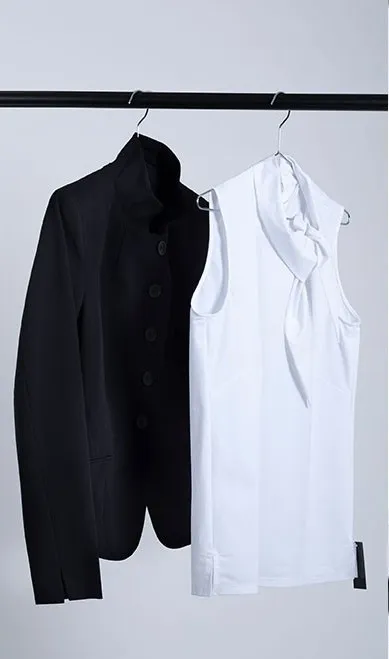
A collection built from modular, combinable pieces simplifies management considerably. Employees can build variety within a coherent colour palette, without the organisation having to manage a large number of separate stock-keeping units.
In practice, this means a limited number of base colours — such as black or navy — combined with accent pieces that reflect the corporate identity. This makes top-up orders more straightforward, reduces residual stock and lowers the complexity of clothing management.
Corporate clothing is fit for purpose when it keeps performing
Corporate clothing is only truly fit for purpose when it consistently meets the requirements of both wearer and organisation over time. This calls for a selection based on working environment, professional image, fabric quality, fit, ease of maintenance and the manageability of the collection.
By structuring these criteria from the outset, purchasing decisions become more consistent, the number of replacements decreases and work clothes remain representatively wearable for longer. In environments where professional image and daily wearing comfort both matter, corporate clothing — like any other workwear— must deliver reliable, lasting performance.